History of Brampton Village Hall
The story of Brampton, from Roman industry and riverside trade to the restored village hall that continues to serve the community today.
Brampton is one of the smallest villages in Norfolk and is almost certainly the smallest of all the places with the same name throughout the world. The village is situated in the valley of the River Bure, approximately 2.5 miles from the market town of Aylsham.
The village has a rich and fascinating history. Archaeological finds date back to the Neolithic period, but much of what is known relates to Roman times when Brampton was a thriving industrial settlement with maritime links across the Roman Empire. Pottery and metal products were manufactured here and exported via a riverside port on the River Bure.
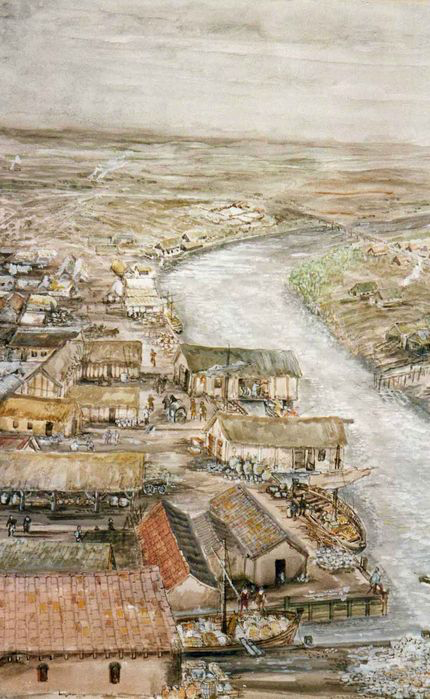
Artist's impression of Roman Brampton, showing the industrial settlement and riverside trading activity that connected the village to the wider Roman Empire.
The village sign is based on a Roman artefact discovered in Brampton and now displayed at Norwich Castle Museum. Excavations carried out during the 1960s and 1970s uncovered a Roman bath house, evidence of extensive industrial activity and the location of the port from which locally manufactured goods were exported.
In 1898, Brampton's Victorian Reading Room was constructed and opened on the 23rd January 1899. Built from corrugated metal with an iron framework, it provided an important social and educational meeting place for local residents and remained at the centre of village life for many decades.
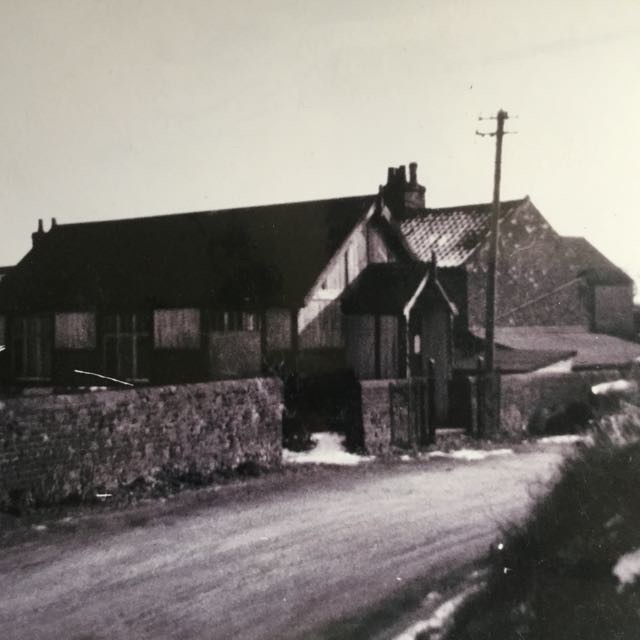
The original Victorian Reading Room, built in 1889.
By the 1940s the metal structure had begun to wear thin. One piece of village folklore tells of a member of the Home Guard accidentally letting go of a practice grenade during a training exercise, sending it cleanly through the thin metal wall without causing serious damage.
By the 1950s the building was becoming increasingly tired and difficult to maintain. Following the closure of the last remaining pub in Brampton in 1962, efforts turned towards restoring and recommissioning the village hall as the centre of community life.
Following a ten-year campaign, led by William “Billy” Spinks, the hall was reopened on 7th July 1973. The hall was officially opened by local celebrity Michael Hunt of Anglia Television. The renovation work was extensive, with only the original Victorian floor and roof ironwork remaining from the 1898 building. The project also included a new bar, sourced from the Sergeants' Mess at nearby RAF Coltishall, together with new kitchen and toilet facilities.
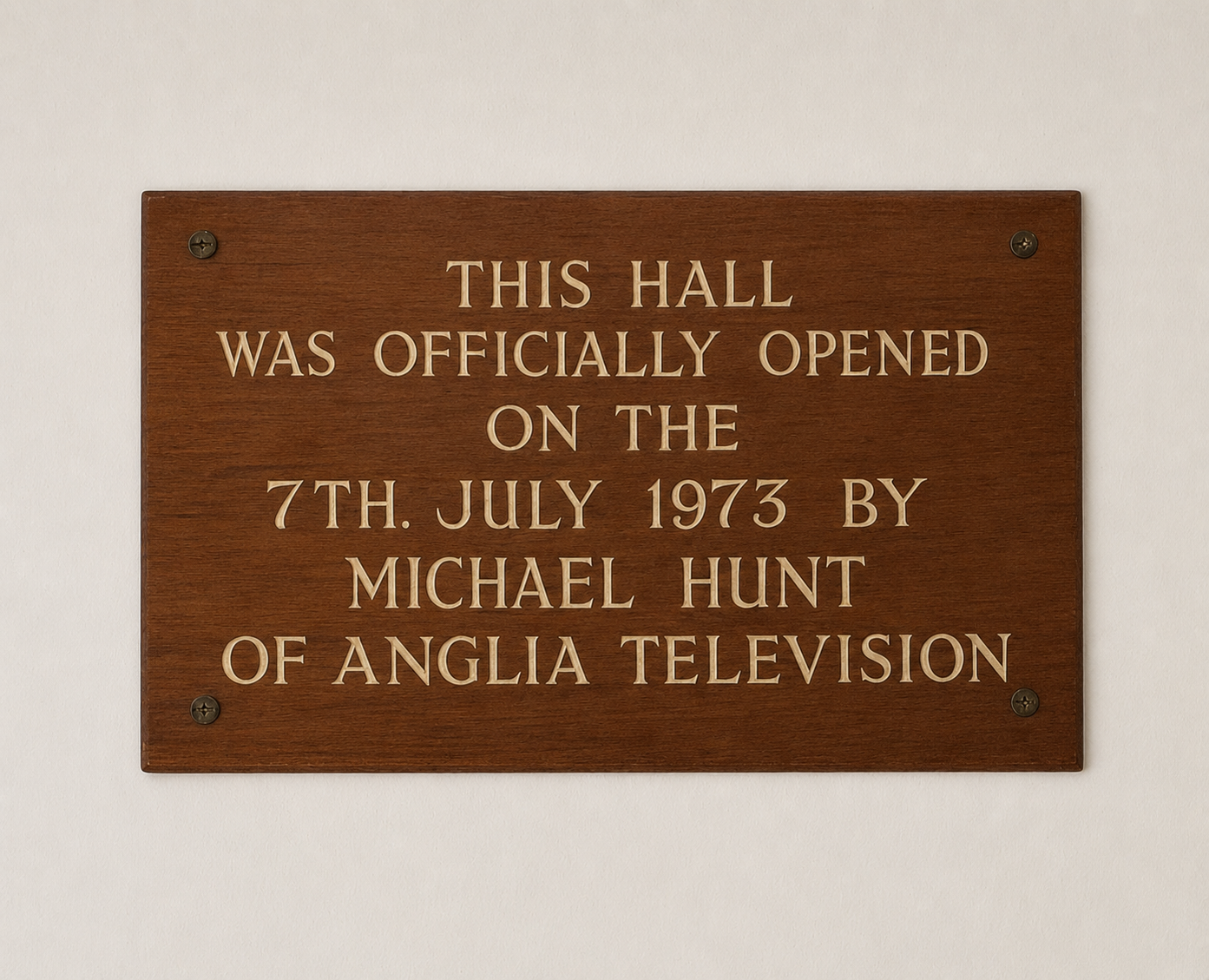
Commemorative plaque marking the official reopening of Brampton Village Hall on 7th July 1973 by Michael Hunt of Anglia Television.
The hall served the community for another half century, hosting annual Christmas parties, street parties, coronations, jubilees, monthly socials and Parish Council meetings. For generations of residents it remained at the heart of village life and provided a venue for celebrations, community gatherings and local decision-making.
By the early 2020s the hall was once again showing its age and in need of modernisation. Between 2022 and 2024 a major restoration project was undertaken to secure the future of the building for generations to come. The works included a new roof, a new floor, new electrical systems, a modernised kitchen, improved insulation and new heating throughout.
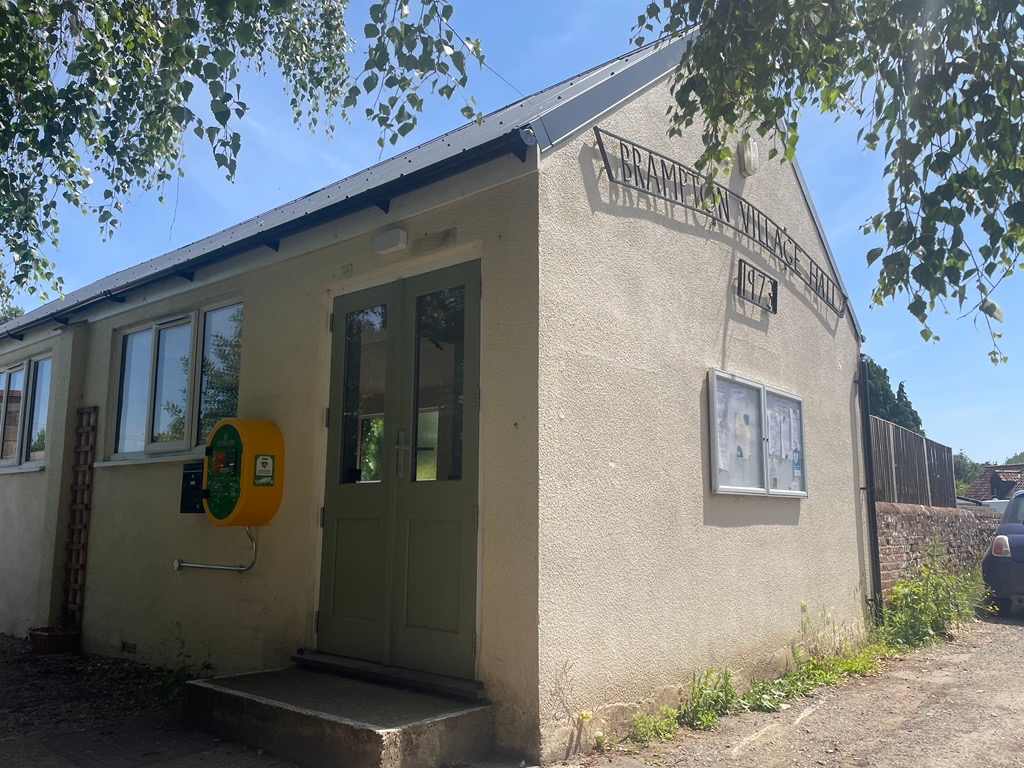
Brampton Village Hall today, restored as a warm and welcoming community venue.
The refurbishment transformed the hall into a modern, energy-efficient and comfortable community facility while preserving its historic character.
Today, Brampton Village Hall is a light, warm and welcoming space that continues to serve the village. More than 135 years after the construction of the original Reading Room, and following two major restorations, the hall remains at the heart of community life and is well placed to serve future generations.